Friday, 21 September 2012

Into Deep Waters - Kaje Harper

Date of Reading:25/07/2012
Author: Kaje Harper
Publisher: M/M Romance Group
Rating: 4/5


          This book is a product of the 'Love is Always Write' promotion sponsored by the Goodreads M/M Romance group. You can download it as a free e-book from goodreads website. The group invited the members to choose a photo and pen a letter for a short M/M romance story inspired by the image. Authors in the group is encouraged to select a letter and write an original tale. Kaje Harper's is one of those.

          A word of caution before proceeding; if you are in anyway prejudiced against gays don't even think about reading this book. Book is an excellent choice for gays and neutral ones. Prose is beautifully written and it feels like a romance like any other. The two lovers do everything a man and woman do together and the author hasn't censored anything also. So those who believe this is something unnatural, beware!, you might actually vomit.
          Daniel Acardi and Jacob Segal meets in 1942 
during World War II as officers of Navy and soon finds mutually attracted. Their relationship flourishes secretly behind empty locker rooms and rented secluded hotels. When their ship comes under attack, Jacob is hurt but timely saved by Daniel. Jacob is sent home to heal, while his lover's fate is to fight some more.
          War ends at last and they move in together. Jacob's family pretends that Daniel does not exist and Danny is not welcome to his own home either. Jacob works in his father's medical shop and as a commercial artist Daniel also finds a life. Like any other normal family they also has little fights -- once Jacob even doubts his lover spends time with other gays. 
         Years pass by and the gays begin to come to the public unafraid, voices are raised for the right to marriage. Attitudes of the younger generation is also changing. Jacob's sister is tolerant and his nieces enjoy the luxury of two uncles.
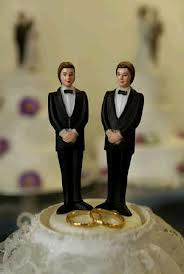
         At last on July 25, 2011 at the age of eighty-seven they marry with the permission of New York state in the presence of family and friends.
"As their hands parted, the ring fell. For a moment it floated on the surface of the water, catching little glints of sun in the interwoven silver and copper strands. Daniel reached for Jacob's hand again, and laced their fingers together, watching it. . . Slowly the ring of their entwined hair slipped below the surface. Another moment and it was gone from sight, heading downwards, carrying his love and Jacob's down safely this time, into deep waters."

Friday, 14 September 2012

Movie Review: Thor

Title : Thor
Directed by : Kenneth Branagh
Starring : Chris Hemsworth and Natalie Portman
Year : 2011
 
          In my English class it is taught that intonation does matter. So if you ask me whether I like this film, I will say 'yes'. Ask again, 'Do you like this?', the answer will be 'Hmm... it's OK'. The thing is nothing here is completely developed; this is not a full fledged love story, no great actions to talk as a superhero movie, and Thor hasn't got a chance to show his worth (nothing to make the spectator love him, well... other than good looks).
           On the other hand, look at his villain brother, poor chap! I wouldn't mind if he is made the hero. Another pathetic example of a hybrid figure (same condition of the colonised people).He is lead to believe that Frost Giants, his own people, are bad but he won't be accepted as an Asgardian (Asgardian in manners and clothing seems to be not enough). The condition of being neither here nor there, is enough to make anyone a villain.
           Another irritating fact is the canonisation of the father, Odin. 'Father won't do anything without a reason', chimes his wife every day. Then why did the all knowing Odin All Father brought up a child ignorant of his identity! It didn't turn out well too.
          May be we have to blame the script. But on the whole film is entertaining. Nice setting and costume for sure. Now to the story.
           Frost Giants of Jotunheim is about to conquer the whole world, beginning with earth and Asgardians led by their king Odin comes for the timely rescue. The evil is defeated and their source of power, The Casket of Ancient Winters is taken.
         Odin's elder son Thor is about to take the throne, but the ceremony is interrupted when some of the Frost Giants attempt a break through. Against his father's orders, Thor with his brother Loki and his friends attacks Jotunheim, and as a result Odin expels his son to earth as a mortal. Only on proving worthy he can wield his hammer again. Jane Foster, an astrophysicist takes him in and they fall in love.
         Meanwhile Loki realises that he is a Frost Giant, therefore the adopted son of Odin. When his father falls into some sort of hibernation, he takes power and tries to destroy the Frost Giants himself to prove his worth. He tries to kill Thor too, but when Thor sacrifices his life to save his friends, his power returns.
          The new Thor who has learned tolerance at last, prevents Loki and he falls to an abyss. Thor can never return to his mortal love. 


Sunday, 2 September 2012

The Name of the Rose - Umberto Eco

Date of Reading: 31/08/2012
Author: Umberto Eco
Translated by: William Weaver (from Italian)
Publisher: Warner Books
Place: San Diego
Year: 1980

          Once I had to face an exam which they said the most important in my life, and consequently the serious faces around made me panic. So now when I read this book I know what Jorge (the villain here) says about the second book of Aristotle which is said to be dealing with comedy is true. Laughter can dispel fear, it may change everything (possibly the outcome of my exam too, which was by the way, disastrous).
         Detective novels are usually considered by the so-called scholars as not worth reading and so not in anyone's academic curriculum. But here Umberto Eco has succeeded in producing a scholarly work within the frame work of crime fiction. All these facts about the Dark Ages of the Catholic Church is pretended to be non-existent, so a common reader will have to struggle hard to make some sense of this religious dilemma. So what keeps the pace is the frame story, the seven murders and the mystery pursued by William, the follower of Roger Bacon (a monk who upholds scientific belief is a strange combination indeed!), who reminds us often of Sherlock Holmes.
          The year is 1327. Adso a young novice of the Benedictine order is placed under William of Baskerville as a scribe and disciple by his parents. Church is going through what we now call the dark ages; Pope John XXII presides over Avignon and is in conflict with Emperor Louis. Factions are arising, condemning the Pope and is consequently burned as heretics by inquisition committees.
        Pope is now turned against the Franciscan order too, as they proclaim their faith in the doctrine of poverty of Christ. So William, an English man and Franciscan is to find a suitable place for the meeting between the leaders of the Franciscan order and the envoys of the Pope. As per this intention they travel to this distant abbey where terrible events are to take place in seven days.
         Adso's memoir is divided into seven days describing everything in detail. By the time they reach the abbey the death of the first man - Adelmo - has already taken place and William as a former Inquisitor is charged with the enquiry by the abbot. Secret seems to lie within the library which functions as a labirynth and is forbidden to the free roaming of others. Two more deaths follow - Venatius and Berengar - and the meeting of the envoys convene under the shadow of these recent events. Soon the herbalist, Severinus is also killed and the cellarer and his companion is mistaken for the crime. The meeting ends in vain.
         The death of Malachi, the librarian clears the mist and William succeeds in finding the clue to enter the secret place in the library, named finis Africae. Abbot becomes the sixth victim and William and Adso finds Jorge, the old blind monk, in the finis Africae. The brain behind the murders is discovered at last. He was preventing the second book of Aristotle which deals with comedy to come to the public eye.
          The book enhances the virtues of laughter, its power to quench fear and consequently Jorge feared that it could ruin the power of Church as it governs on fear. So he hides it all these years, but when the young people with their lust for knowledge, begin to search for finis Africae, he smears the book in poison and all who read it got killed. Only Adelmo's death was a suicide as a result of his sinning with Berengar.
         When he fails to convince (or kill) William, Jorge tears the pages and gulps it down. In the fight that ensued, a lamp is toppled over, the library catches fire and soon it spread to the whole abbey. All the deaths that occurred had corresponded to the signs warning the arrival of Antichrist which was only a coincidence. But as William says towards the end, we see the Antichrist in Jorge, "the Antichrist can be born from piety itself, from excessive love of God or of the truth, as the heretic is born from the saint and the possessed from the seer".

Umberto Eco
          William and Adso parts ways never to see each other again. Adso returns to the monastery at Melk where he writes down this manuscript as an old man. William, it is informed that, dies in the great plague.

Something to think about:
          
"The idea is sign of things, and the image is sign of the idea, sign of a sign".

"The good of a book lies in its being read. A book is made up of signs that speak of other signs, which in their turn speak of things. Without an eye to read them, a book contains signs that produce no concepts; therefore it is dumb".

"A dream is a scripture, and many scriptures are nothing but dreams".

--- the book is made into a film in 1986 starring Sean Connery as William and Christian Slater as Adso
--- the title is said to be neutral, nothing related to the story 


Monday, 27 August 2012

Roots - Alex Haley

Date of Reading: 15/11/07
Author: Alex Haley
Sub title: The Saga of an American Family
Publisher: Picador
Place: London
Year: 1979

          If I hadn't read this book formerly, I would have thought that life of Blacks was much like that of in 'Gone with the Wind' -- peaceful, content and happy. Black Arts Movement of 1960's has repeatedly urged its followers to reclaim their past and warns against their merge with the dominant White culture. It all seems ages ago now but, to have some traditions and beliefs of one's own is always fascinating, this almost makes our identity and washes down the feeling that we are alone.
         So Haley here carefully notes down the story of his family through generations in America, beginning with his African ancestor, Kunta Kinte. Unlike other biographical fiction this one is never boring ( too big perhaps, but things get better and better once the pages turn), and of course, stories of survival are always good to hear. Nothing is better to generate some hope.
         Kunta Kinte was born on the spring of 1750 in the village of Juffure, at the coast of Gambia, West Africa as the first child of Omoro and Binta Kinte. He has three brothers -- Lamin, Suwadu and Madi. When he was about 17 rains (years), Kunta is captured by the toubobs (White men), transported to America and is sold to John Waller. Four times he tries to escape but in vain. On the fourth attempt his foot is chopped off by two white professional slave catchers. This provokes John's brother William so much that he takes Kunta and assigns him in the vegetable garden at Virginia.
         Kunta finds that other Blacks in America are born in their itself and these brownish ones have never known Africa. He keeps his distance at first but later marries Bell, the cook there. A daughter is born called Kizzy. Kunta (or Toby as he is called now) is decided that his family won't be purged in ignorance and so teaches his family history to Kizzy.

Alex Haley

         When Kizzy helps her boy friend to escape she is sold to Tom Lea who owns a plantation in North Carolina. She is brutally raped by her new master and her son George is born. As per the instructions of her father whom she is not to be seen again, Kizzy passes their family story to her son. George becomes an expert in training game cocks which earns him the nick name 'Chicken George'. He marries Matilda and they have eight children. With each new child's birth George would gather his family within their slave cabin telling them afresh about their African great grandfather.
         When George was sent to England as a result of his master's failure in a bet, his family is sold to a Massa Murray. His fourth son Tom was a blacksmith and he marries Irene and they have eight children too. With each new birth Tom continued his father's tradition. Youngest of them was Cynthia, who was two years old when they are set free by President Lincoln. Later she marries Will Palmer and their daughter Bertha weds Simon Haley and our author is born. Alex also hears the story from his grandma which his mother has stopped believing. In his later life he goes to Juffure to confirm the tales and by then six generations has passed after Kunta. This book is dedicated to his country.

Haley's boyhood home and memorial in Henning
Attribution: Thomas R. Machnitzki


Saturday, 25 August 2012

Rebecca - Daphne du Maurier

Date of Reading: 07/11/2007
Author: Daphne du Maurier
Publisher: Avon Books
Place: New York
Year: 1971

          Anyone who likes Charlotte Bronte's 'Jane Eyre' will certainly love 'Rebecca' too. Even the story pattern is almost same: a poor, innocent, not-that-pretty girl falls in love with a rich, once married, unlucky guy with a shameful past; the truth comes out and the man survives with the support of the girl.
        Story is often described as a gothic romance; well, there is nothing frightening about it, but the suspense is awesome. I would have liked to hear our heroine's name though, its really strange reading it like that (something like reading a letter without knowing the sender).
         It seems two people living together need not have to use their names at all. May be the whole idea of a Mrs. de Winter cannot be contained by a single name; or does it imply that her existence is intermittently connected with her husband with no life of her own? Indeed, isn't it our name that defines us somehow? (the hero's name - Maxim - is used quite often too).
        Any way, the feature adds much to its charm. This work is superb for sure.
         The female protagonist was living as a maid of Mrs. Van Hopper at Monte Carlo, France when she meets with Maximilian de Winter, the owner of the most reputed house, Manderley. His wife, the most beautiful Rebecca, is drowned and he is therefore here to shed off the grief. She falls in love and in spite of their huge age difference, they marry.
        With this husband she barely knows the new bride arrives at Manderley, only to find that everything in there chimes the praises of the late Mrs. de Winter and expects her to be like her. Alas! our girl is not from gentry class and so everything she tries to do ends in disaster. Mrs. Danvers, the house keeper who lives in the memory of Rebecca, hates her especially. Only Frank Crawley, the estate agent and Beatrice, Maxim's sister give a favourable response.
         Then one day the drowned boat of Rebecca with her supposed to be found body is discovered. Maxim confesses to his wife at last that he has killed Rebecca. The true cunning Rebecca was never known to the world, what they admired was her outward beauty and charm. After their marriage she has made a bargain with Maxim, she would make Manderley the most beautiful place but in return she must be allowed to continue with her liaisons with other men. Maxim feared the shame of a divorce and agreed.
         She has always laughed at the men she had slept with and never loved anyone. When she reveals that she is with the child of another, Maxim can't take any more. She shoots her dead, and drowns the boat secretly. But now the boat is found and Jack Favell, her cousin and former lover is the first to raise the alarm. A re-investigation is announced and Rebecca is found to have an appointment with one Dr. Baker on the day of her death. She is found to have cancer and accordingly her death is declared as a suicide.

Daphne du Maurier
        Maxim is saved but Mrs. Danvers is too wise, she burns down the whole Manderley. There ends the story.
--- A sequel is also there titled 'Mrs. de Winter' by Susan Hill.
       

Monday, 13 August 2012

Kafka on the Shore - Haruki Murakami

Date of Reading: 04/11/ 2007
Author: Haruki Murakami
Translated by: Philip Gabriel
Publisher: Vintage
Place: Great Britain
Year: 2005

        I am not much of a Murakami reader, and I don't like this one. Oh! actually I hated it. Oedipus myth often gives me headaches (I don't expand my imagination there), so its new version in a modern metaphysical world is actually unbearable. Sex scenes with the mother and the slottering of the cats is enough to make one claustrophobic.
         Murakami has once stated that the secret to understand the novel is to read it in multiple times. May be future readers can benefit from his words:

        "Kafka on the Shore contains several riddles, but there aren't any solutions provided. Instead, several of these riddles combine, and through their interaction the possibility of a solution takes shape. And the form this solution takes place will be different for each reader. To put it another way, the riddles function as part of the solution. It's hard to explain, but that's the kind of novel I set out to write".
         The novel follows the fortunes of two remarkable characters -- Kafka Tamura (whose real name is never revealed) and old Nakata. Kafka runs away from home at the age of fifteen, under the shadow of his father's dark prophesy which says that he would kill his father and be with his mother and sister.
         On reaching Shikoku, he takes refuge in the library at Takamatsu. His mother and adopted sister has left him at the age of four and now certain coincidences makes them cross paths again though each blinded to others true identity. His sister Sakura is met on the way and mother, Miss Saeki, is the head librarian. Miss Saeki was in love with a man in Kamura family and when he was killed, her life stopped there. Since then she has had many lovers including Kafka's father, the famous sculptor, Koichi Tamura.
         Nakata, the other man involved in the story is a little odd (but his story is more interesting) as he has the capacity to talk with cats as the result of a childhood accident. Once on his venture to find a missing cat, he meets Kafka's father who asks him to kill him. He has made flutes with the souls of cat by killing them alive, and Nakata has no remorse in doing what he asked. Later he journeys to Takamatsu with the help of a truck driver, Hoshino. He finds an entrance stone and opens another world.
          Meanwhile Kafka goes unconscious at the time of his father's death and on waking finds himself drenched in his father's blood. Miss Saeki finds her former lover in Kafka and they make love. In one of his dreams he seduces his sister and thus the prophesy is fulfilled.

Haruki Murakami
         Miss Saeki has once opened the entrance stone and this killed her lover. After informing Nakata of all this she dies, and the next day Nakata is also dead. Kafka visits the other world; his father's aim is to enter that world and thereby conquer the souls of men. But Hoshino closes the entrance and kills the dirty soul of Tamura. Kafka goes back to Tokyo to complete his education; Oshima, the librarian offers him the job of an assistant.


Saturday, 11 August 2012

Autobiography of a Geisha

Date of Reading: 25/10/2007
Author: Sayo Masuda
Translated by: G. G. Rowley
Publisher: Vintage
Place: Great Britain
Year: 2004

        This is my third reading of a book on Geisha and as a true story this is much more valid than others, even more entertaining. In Masuda's view a Geisha's life is not as glamorous as seen by the outside world, so her writings concentrate on the contempt faced by an ordinary Geisha from her own society. A simple and beautiful work which everyone will love!
        Masuda was born on 1925 near the town of Shiojiri in Japan's mountainous Nagano Prefecture. Her parents were not legally married, and she was left with an uncle till the age of five. She never knew her father. At an age when she  should have begun to attend primary school, her uncle sent her to work as a nursemaid for a landowning family.
        When Masuda was about twelve, her mother, by this time married with four small children, is in need of money for her husband's medical treatment and so this non-wanted daughter is sold to a Geisha house in the hot - springs resort of Suwa, a former castle town on the shores of Lake Suwa in Nagano Prefecture.
         Masuda gives a full account of her painful days as a novice when she had to suffer the cruelties of Elders and the mastering of the Geisha arts of dance, song, shamisen and  drum is none too easy. In her sixteenth year, ie. in 1940, she made her debut as a Geisha. She gets a danna (the man who keeps her as mistress) nicknamed Cockeye and the days in the Geisha house are finally over. When she begins to work in a factory and meets Motoyama - san, who has come from the army to regain his health, seeds of true love are planted too.
         It is not her physical beauty that attracted Motoyama-san as he believed love is in the heart, not in sexual pleasures. He is more than willing to marry her but as a soldier his life is not secure, and his death may give her unwanted grief. On the night he left she attempts suicide but is timely saved by a fisherman. When Cockeye gets a wind of this affair, he leaves.
        Masuda goes to Shijori to her house; her mother is now with another man as her husband is dead. She takes her younger brother from the aunt and they go to Chiba. There she conceals the fact of her life as a Geisha and is immediately accepted by others; she even begins to get marriage proposals. Her sole aim is to give some primary education to her brother and together they plan to start a shop. But all is in vain, when brother comes down with intestinal tuberculosis.
         Masuda doesn't have enough money for medicine and she takes the old job as a Geisha. Nowadays their position is nothing better than a prostitute. On finding this out brother commits suicide as he was aware that he has no cure. Masuda turns mad with grief for a few months but then returns to Suwa and meets Motoyama-san who is now a city counsellor. He has looked for her four years on his return from the army but now he is married and has a child. They begin to spend their days together, but soon rumours begin to spread on his reputation and she leaves.

Masuda with her translator

            On trying to find a way to death she meets an old man who advises her to live for others. At Toyoshina she begins to work in a restaurant. In the memory of her brother, Masaru, she buys books for children and makes nice stories for them. She helped farmers in rice planting and soon people began to ask her help on looking after the children.
         Sayo Masuda died on 26 June 2008, a few months before her eighty-third birthday. She barely knew her letters and wrote this with the help of others. 

Thursday, 9 August 2012

The Barbarian and the Geisha

Date of Reading: 23/10/2007
Author: Robert Payne
Based on: the screenplay by Ellis St. Joseph

         The story is based on the true story of American diplomat Townsend Harris, his life in Japan in 1850's and 60's, and his romance with a 17 year old Geisha named Okichi. Their story is one of the well known folk tales in Japan.
        What the book promises is a love story, but nothing of that sort is going on here. Instead we see the political tug of war between America and Japan. Author has tried to make a detective novel type atmosphere, which doesn't help much. So don't get fooled by the word 'Geisha' in the title -- she doesn't have much of a role -- if it is Geisha that you are interested in, better seek something else.
         Townsend Harris is sent as American Consul to Japan; his intention is to sign a treaty of trade between the two countries. He stays at Shogun with his faithful friend and interpreter, Henry Heusken. Japanese has inserted a spy in the household, a Geisha named Okichi, and they love each other.

The film poster of 'The Barbarian and the Geisha'

        He had to go to Yedo for his purpose, where his interpreter is Moriama, a prince. Harris soon finds out someone behind the King is really pulling the strings and after three years of stay there, it turns out to be Moriama. His men kill Heusken mistaking him for Harris and the Geisha is nowhere to be seen.
         The real Harris died in New York in 1878, and the real Kichi committed suicided in Shimoda in 1892.  

Tuesday, 7 August 2012

The Heart Denied - Linda Anne Wulf

Date of Reading: 03/08/2012
Author: Linda Anne Wulf
Publisher: Hydra Publications
Place: USA
Year: 2010
From: the publisher in exchange of an honest review

         This is her first novel and what drew me towards this is her second book 'Heart of the Hunter'. As a reviewer I must confess that I admire its craftsmanship -- nice climax and suspense, poetically justified ending -- but as a simple reader, I can't find that particular attachment to the protagonist. Thorne Neville is good, but he can't just compete with Fianna Morgan. Any way, I was never much a fan of male perspective novels and here it lacks the warmth and approachfulness that is usual to romance stories. Thorne seems to be much keen on carnal pleasures.
         The most interesting part is the use of deu ex machina -- here in the form of many 'convenient' deaths. First there is Gwynneth's suicide; the fact that the Roman Catholic Church views suicide a worse sin than adultery is conveniently forgotten. Had our devote Catholic got a view of burning hell before death? Its a pity that she is judged with the same standards by which she judged her maids (one is almost reminded of Robespierre's death in French history).
         Now comes the end of Hobbes and the reader here breathes a sigh of relief. Abominable character! Plus, now little Catherine doesn't have to tolerate a jailed Dad. Lastly, to make everything perfect, there is the 'tragic' death of Kate which as Dumbledore says is for the greater good. Never had I found deaths this much relieving! Good providential help to make it a happily ever after.
         Thorne Neville returns to Wycliffe Hall after four years in the university. As pre-arranged by his late father he is to marry Miss Gwynneth Stowington, a devout Roman Catholic who is bullied out of the convent by her father. Thorne has no feelings towards her, no intention of falling in love either as the one girl he loved has taken his heart to her grave.

Linda Anne Wulf

         Thus they marry. But carnal pleasures are against Gwynneth's strong beliefs and as Neville is not in the habit of forcing a woman, she remains a virgin or does so until she meets with the stable master Mr. Hobbs. He is a half-brother of Thorne though the master of the house is not aware of the fact. Hobbs has a reputation among maids; the case of Elaine Combs particularly stands out. Though she carries his child, he denies any form of relation with her. Thorne believes the maid but as he cannot lose an able stable master, he protects Elaine even against his wife's objections. He has a strange affection to Elaine which he cannot yet recognise.
         This villainous character is now in love with Lady Neville and ravishes her. Gwynneth finds herself pregnant and jumps out of the tower. After her death, everything about Hobbs comes to light and he is also charged with two other murders. Finding himself trapped, he takes his own life.
         Elaine has gone missing by this time and Thorne discovers her when she is at labour. A girl is born. Elaine turns out to be Lady Hargrove or Lena, Thorne's childhood sweetheart who was believed to be dead. She was running from her father as he tried to molest her.
        Thorne accepts her along with the child and they marry. He soon finds out that he has begotten a son by a whore with whom he is previously associated. When the mother dies after giving birth, they adopt the son too. By the end of the story Wycliffe Hall is blessed with four children.    

Saturday, 4 August 2012

Memoirs of a Geisha

Date of Reading: 22/10/2007
Author: Arthur Golden
Publisher: Vintage Books
Place: New York
Year: 1997

         'Gei' means arts and therefore the literal meaning of 'Geisha' is artist. A Geisha is above all an entertainer and a performer. But in reality the line that divides a Geisha and a prostitute is really thin; a circumstance that can be compared to the fate of Devadasees in Indian temples.
         In this context, this literary sensation of Arthur Golden seems to be a mere fancy tale; story is related as the memoirs of a famous Geisha who had reached the pinnacle of her career, led a contented life and finally succeeded in becoming the mistress of the man she loved all her life -- something like a from rags to riches story.
         Imagine for a moment your little girl proudly announcing one day, "Dad/Mom, when I grow up I will become a famous prostitute". Well, this pretty much summarises the situation. How could anyone be proud to be a Geisha is beyond my imagination (I mean the Geisha in the story, the real life of a Japanese Geisha is still clouded in mystery), but even if your conscience won't agree with the too good-to-be-true tale, the novel is a beautiful, brilliant masterpiece and there is no failing to like it.
         A much more true version can be found in Sayo Masuda's 'Autobiography of a Geisha'. Here the author, herself once a Geisha, reveals some of the behind-the-screen facts, especially the treatment they get from other ladies in the society.
         Nitta Sayuri here gives an account of her life as a Geisha and it begins in the poor fishing village of Yoroido in 1929. Her real name is Chiyo - Chan. At the age of nine, she and her sister Satsu are sold due to the poverty at home -- she to a Geisha house at Kyoto, and Satsu to a prostitute group.
         House where a Geisha lives is called an okiya; Chiyo's okiya is Nitta which consists of Auntie, Mother, Granny, Hatsumomo and Pumpkin, a girl of her age. When Chiyo attempts to escape from the place, she loses the opportunity to become a Geisha and henceforth is fated to live the life of a servant maid. The meeting with a man called as Chairman produces new inspiration and from then on her sole aim is to procure him as a danna (much like a patron).
         At the funeral of Granny the well known Geisha Mameha notices her and she convinces Mother to train her again and also under Mameha. Now the life she has aspired is back on track and Chiyo changes her name to Sayuri when she becomes the Geisha. Her mizuage (the custom of losing the virginity), is done by Dr. Crab and the huge amount of money thus gained was enough to convince Mother to adopt her; this way one day the okiya will be hers. Hatsumomo, who has also set her hopes on this, leaves the place, becomes a prostitute and dies of excessive drinking.
         Sayuri becomes the mistress of General Tottori even though Nobu, Chairman's partner, also has his eyes on her. Then comes the World War II and the Geisha villages are closed. Under Nobu's help she survives and resumes the same profession after the war. Now is the time to repay Nobu, but her heart as always is set on the Chairman. So to ward off Nobu she pretends to have a relationship with a Minister, but it is the Chairman who finds out this secret; but on recognising her love he accepts her. He too has loved her always and Mameha has come to the aid because of his instructions. She owes her Geisha existence to him.
          On his insistence Sayuri drops her profession; she gives birth to a son and migrates to New York. She can only hope to be a half wife as a Geisha but she is content.
          The character of Sayuri and her story is imaginary. The book has got into a lot of controversy when the author revealed his source as Mineko Iwasaki; she later writes a book titled Geisha: A Life as she felt that Golden's novel gives forth the wrong impression.

Wednesday, 1 August 2012

Middlemarch - George Eliot

Date of Reading: 18/10/2007
Author: George Eliot
Subtitle: A Study of Provincial Life
Publisher: Collier Books
Place: New York
Year: 1962


         Most of the Indian Universities include this in their curriculum, but mine is an exempted one. This is lucky as we have enough worries without this horribly boring book adding to the burden. Well, that's the case of all Eliot's works. They look downright dry but if you can finish it, then the aura will never leave. I still remember even the character names, which is unusual. And the dying scene of Casaubon, with Dorothea running towards the garden ready to give the promise, lingers in the mind too.
          Middlemarch is a province in Britain and the life of its people is the theme of the novel (as you can imagine 'people' here applies only to the upper class gentry). 
         Mr. Brook is an unmarried gentleman and his two nieces -- Dorothea and Celia -- lives with him. Book opens with a description of Dorothea, about her simple, puritanic and high religious nature. Sir Chettam, their neighbour has his eyes on her as a prospective wife, but she marries Casaubon, a clergy man of wealth and high knowledge who is old enough to be her father. Chettam later marries Celia.
         Lydgate is the doctor in the town and he marries Rosamond Vincy, the mayor's daughter against her father's objections. Soon his bride's extravaganza makes him bankrupt. Fred, Rosamond's brother is in love with Mary Garth, the estate manager's daughter; but she won't have a good-for-nothing fellow like Fred. In order to win her consent he begins to work for her father and makes some money. They marry and have three sons   in the course of the novel.
          After an year of not-so-pleasant marriage life Casaubon dies leaving his wealth to Dorothea with the strange condition that she should not marry his cousin Will Ladislaw. At this point there comes a man called Raffles and he blackmails Bulstrode, Vincy's brother-in-law. His first wife was Ladislaw's grandmother who had a daughter -- Sarrah -- in the first marriage. Their wealth was amassed through crimes and on finding this Sarrah leaves home and marries Will's father. Bulstrode keeps her dwelling place a secret, inherits his wife's money and comes to Middlemarch after her death.
          Now Raffles stirs the past again and the word spreads; Will won't take any part of that evil wealth. So when Raffles dies everyone thinks Bulstrode has something to do with it and he is forced to flee from Middlemarch with his wife. 
         Dorothea comes to the rescue of Lydgate and pays off his debts. He dies at the age of fifty leaving behind four children; Rosamond marries another wealthy physician. And for Dorothea, she marries Will Ladislaw disregarding the condition in the will  and consequently loses her position as the heiress. They move to London and at the end of the novel they have a son.